

18 April 2026
Is Ethical Production Part of Sustainability?
What makes a material truly sustainable?
Sustainable materials are often defined by how they perform environmentally. Lower carbon footprint. Recycled content. Reduced resource extraction.
These are important metrics. They are measurable, comparable, and increasingly built into how the industry evaluates impact.
But they do not tell the whole story.
A material can be low-carbon and still be produced under exploitative conditions. It can reduce emissions and still depend on unsafe labour,
informal economies, or unequal value chains. So the question shifts. Not just how a material performs, but how it is made
and who it impacts along the way.
Sustainability cannot stop at carbon
Most conversations around materials today are centred on emissions. Embodied carbon has become a key metric in construction, and for good reason.
The building sector accounts for nearly 26% of global energy-related emissions, with materials contributing a significant share of that impact.
Reducing this footprint is necessary.
But carbon is only one layer of a much larger system.
Extraction, processing, manufacturing, and transportation are not abstract processes. They involve people, labour conditions, and economic structures
that are often far removed from the final point of use. This distance makes it easier to focus on performance metrics while overlooking how those
materials come into existence.
A specification sheet can confirm environmental performance. It cannot guarantee ethical production.
The hidden labour behind materials
Every material carries a supply chain.
Mining, sorting, processing, fabrication, transport. Each stage relies on labour that is rarely visible in the finished product. By the time a material reaches
a construction site, most of its social and environmental impact has already been determined.
In many parts of the world, waste collection and material recovery continue to operate within informal systems. Workers often lack formal recognition,
stable income, and adequate safety measures, even though their work is essential to recycling and resource recovery.
According to the International Labour Organization, over 60% of the global workforce operates in the informal sector, with a significant portion engaged
in low-value industrial processes and material recovery.
These systems sustain circular economies. They reduce landfill burden and enable materials to be reused.
But they are rarely supported in proportion to their importance.
When sustainable materials depend on these systems without improving conditions, the environmental benefits are achieved at a social cost.
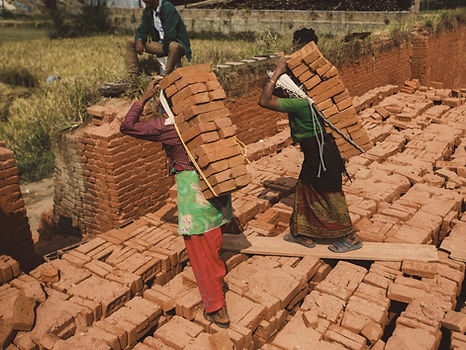
Image Credits: Pexels
Circular economy needs fair systems
The idea of a circular economy is straightforward. Keep materials in use for as long as possible. Reduce waste. Minimize extraction.
In practice, it is far more complex.
Circular systems depend on labour at every stage. Waste needs to be collected, sorted, processed, and reintegrated into production. This requires time, skill,
and coordination, often under challenging conditions. If these systems are not structured ethically, they risk reinforcing the same inequalities they are meant
to address.
Construction and demolition waste alone is one of the largest waste streams globally, generating over 2 billion tonnes each year. Much of this material
flows through fragmented and informal networks before it is reused or discarded.
Scaling circular materials without strengthening these systems creates an imbalance.
Environmental gains on one side. Social gaps on the other.
Traceability and transparency
One of the most persistent challenges in material sustainability is traceability.
Where does the material originate?
Who processed it?
Under what conditions was it produced?
These questions are not always easy to answer. Supply chains are often long, layered, and opaque, involving multiple intermediaries across different geographies.
As a result, materials are frequently evaluated based on technical performance alone. Strength, durability, carbon footprint. Important, but incomplete.
Without transparency, it becomes difficult to assess the full impact of a material. Not just on the environment, but on the people and systems involved in its
production.
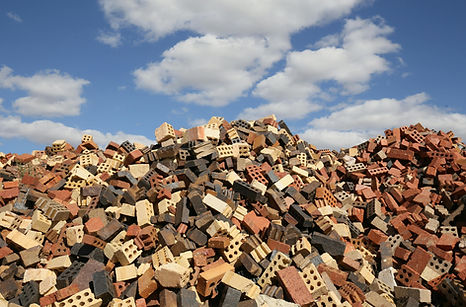
Image Credits: Pexels
Circular economy needs fair systems
The idea of a circular economy is straightforward. Keep materials in use for as long as possible. Reduce waste. Minimize extraction.
In practice, it is far more complex.
Circular systems depend on labour at every stage. Waste needs to be collected, sorted, processed, and reintegrated into production. This requires time, skill,
and coordination, often under challenging conditions. If these systems are not structured ethically, they risk reinforcing the same inequalities they are meant
to address.
Construction and demolition waste alone is one of the largest waste streams globally, generating over 2 billion tonnes each year. Much of this material
flows through fragmented and informal networks before it is reused or discarded.
Scaling circular materials without strengthening these systems creates an imbalance.
Environmental gains on one side. Social gaps on the other.
Traceability and transparency
One of the most persistent challenges in material sustainability is traceability.
Where does the material originate?
Who processed it?
Under what conditions was it produced?
These questions are not always easy to answer. Supply chains are often long, layered, and opaque, involving multiple intermediaries across different geographies.
As a result, materials are frequently evaluated based on technical performance alone. Strength, durability, carbon footprint. Important, but incomplete.
Without transparency, it becomes difficult to assess the full impact of a material. Not just on the environment, but on the people and systems involved in
its production.
Beyond compliance
Ethical production is often reduced to compliance. Meeting minimum labour standards. Following regulations. Avoiding violations.
But compliance sets a baseline. It does not define responsibility.
True sustainability requires a more active approach. Improving working conditions rather than maintaining them. Ensuring fair and consistent wages.
Providing safe environments across all stages of production. Recognizing and formalizing informal labour where it already exists.
These are not external considerations. They are integral to how materials are produced and sustained over time.
Materials as systems of impact
A material is not just a physical product. It is a system that connects extraction, labour, technology, and design. Decisions made at the material level influence
environmental outcomes, economic structures, and social conditions simultaneously.
When ethical considerations are integrated into production, materials begin to operate differently. They do not only reduce carbon. They contribute to more
stable supply chains, more equitable labour systems, and more resilient forms of production. This is where sustainability gains depth.
Rethinking value in construction
The construction industry has traditionally evaluated materials based on cost, performance, and availability. These criteria remain important, but they do not
capture the full picture. Sustainability adds another layer. Ethics adds another.
These layers are not always reflected in immediate costs. Ethical production may require better infrastructure, more formalized systems, or longer timelines.
But it also creates long-term value. More stable and reliable supply chains. Improved quality and consistency. Reduced risk of disruption. Better livelihoods for
those involved in production.
These outcomes are not secondary benefits. They are part of building responsibly.
Toward responsible material futures
As demand for sustainable materials continues to grow, the criteria used to evaluate them must expand as well. Environmental performance alone is not enough.
Materials need to be understood as complete systems. From source to production to application.
Because sustainability that ignores labour is incomplete. And materials that reduce environmental harm while perpetuating social inequity do not fully address the challenges they are intended to solve.
A truly sustainable material does two things.
It reduces impact on the planet.
And it improves conditions for the people involved in making it.
Both are necessary.
https://www.researchgate.net/publication/402926859_Construction_and_Demolition_Waste_CDW_Management
